
söndag 1 maj 2016

Alfa Tokoferoli ja PI voivat vaihtua fosfaatissa
https://globalmedicaldiscovery.com/key-scientific-articles/modulation-phosphorylation-tocopherol-phosphatidylinositol-htap1sec14l2-mediated-lipid-exchange/
Phosphorylated, but not un-phosphorylated tocopherol (vitamin E) induces expression of the vascular endothelial growth factor (VEGF).
A specific tocopherol and phosphatidylinositol binding protein, hTAP1/SEC14L2, exchanges tocopherol and phosphatidylinositol and modulates their phosphorylation. Lipid binding and exchange by hTAP/SEC14L2 modulates signal transduction and gene expression leading to induction of the expression of VEGF.
A novel signaling pathway involving hTAP1/SEC14L2-mediated lipid exchange lends itself as target for pathogenic and therapeutic studies.
Figure Legend
Lipid exchange molecular model for hTAPs and its role in lipid transport and enzyme regulation. (A) hTAPs transfer lipids (e.g. phosphatidylinositol, phosphatidylcholine, vitamin E, squalene) from/to cellular import/export sites or between different membranes and membrane domains such as lipid rafts
. (A and B)
hTAPs mediated lipid transport may change membrane lipid composition and membrane curvature and in this way influence signal transduction, gene expression and secretion.
(B) hTAPs bring lipid substrates (S) to specific enzymes (E) (e.g. phosphatidylinositol-3-kinases PI3K , tocopherol kinase, squalene epoxidase), present them in the correct orientation and timing, and/or remove the lipid products (P) from the enzyme, thus enhancing lipid turnover at the catalytic center (CC).
Lipid release and presentation occurs by lipid exchange with a homotypic or heterotypic lipid and may occur preferentially upon interaction of hTAPs with membranes, thus confining lipid membrane removal/insertion and lipid enzymatic modification to membranes.
Selected further reading

1Vascular Biology Laboratory, JM USDA-Human Nutr. Res. Ctr. On Aging, Tufts University, Boston, Massachusetts, United States of America.and
2Dept. Biochem. and Mol. Biology, Monash University, Melbourne, VIC, Australia.
Abstract
Phosphorylated, but not un-phosphorylated tocopherol (vitamin E) induces expression of the vascular endothelial growth factor (VEGF).
A specific tocopherol and phosphatidylinositol binding protein, hTAP1/SEC14L2, exchanges tocopherol and phosphatidylinositol and modulates their phosphorylation. Lipid binding and exchange by hTAP/SEC14L2 modulates signal transduction and gene expression leading to induction of the expression of VEGF.
A novel signaling pathway involving hTAP1/SEC14L2-mediated lipid exchange lends itself as target for pathogenic and therapeutic studies.
Figure Legend
Lipid exchange molecular model for hTAPs and its role in lipid transport and enzyme regulation. (A) hTAPs transfer lipids (e.g. phosphatidylinositol, phosphatidylcholine, vitamin E, squalene) from/to cellular import/export sites or between different membranes and membrane domains such as lipid rafts
. (A and B)
hTAPs mediated lipid transport may change membrane lipid composition and membrane curvature and in this way influence signal transduction, gene expression and secretion.
(B) hTAPs bring lipid substrates (S) to specific enzymes (E) (e.g. phosphatidylinositol-3-kinases PI3K , tocopherol kinase, squalene epoxidase), present them in the correct orientation and timing, and/or remove the lipid products (P) from the enzyme, thus enhancing lipid turnover at the catalytic center (CC).
Lipid release and presentation occurs by lipid exchange with a homotypic or heterotypic lipid and may occur preferentially upon interaction of hTAPs with membranes, thus confining lipid membrane removal/insertion and lipid enzymatic modification to membranes.
Selected further reading
- Kempna P, Zingg JM, Ricciarelli R, Hierl M, Saxena S, Azzi A. 2003. Cloning of novel human SEC14p-like proteins: cellular localization, ligand binding and functional properties. Free Radic. Biol. Med. 34:1458-72
- Zingg JM, Azzi A, Meydani M. 2014. Induction of VEGF expression by alpha-tocopherol and alpha-tocopheryl phosphate via PI3Kgamma/PKB and hTAP1/SEC14L2-mediated lipid exchange. J Cell Biochem
- Zingg JM, Libinaki R, Lai CQ, Meydani M, Gianello R, et al. 2010. Modulation of gene expression by alpha-tocopherol and alpha-tocopheryl phosphate in THP-1 monocytes. FRBM 49:1989-2000
- Zingg JM, Meydani M, Azzi A. 2010. alpha-Tocopheryl phosphate – An active lipid mediator? Mol Nutr Food Res 54:1-14
- Zingg JM, Meydani M, Azzi A. 2012. alpha-Tocopheryl phosphate-An activated form of vitamin E important for angiogenesis and vasculogenesis? BioFactors 38:24-33
Journal Reference
Zingg JM1, Libinaki R2, Meydani M1, Azzi A1. PLoS One. 2014;9(7):e101550.1Vascular Biology Laboratory, JM USDA-Human Nutr. Res. Ctr. On Aging, Tufts University, Boston, Massachusetts, United States of America.and
2Dept. Biochem. and Mol. Biology, Monash University, Melbourne, VIC, Australia.
Abstract
The vitamin E derivative,
alpha-tocopheryl phosphate ({Alpha}TP), is detectable in cultured cells,
plasma and tissues in small amounts, suggesting the existence of
enzyme(s) with {Alpha}-tocopherol ({Alpha}T) kinase activity. Here, we
characterize the production of {Alpha}TP from {Alpha}T and
[{Gamma}-32P]-ATP in primary human coronary artery smooth muscle cells
(HCA-SMC) using separation by thin layer chromatography (TLC) and
subsequent analysis by Ultra Performance Liquid Chromatography (UPLC).
In addition to {Alpha}T, although to a lower amount, also {Gamma}T is
phosphorylated. In THP-1 monocytes, {Gamma}TP inhibits cell
proliferation and reduces CD36 scavenger receptor expression more
potently than {Alpha}TP. Both {Alpha}TP and {Gamma}TP activate the
promoter of the human vascular endothelial growth factor (VEGF) gene
with similar potency, whereas {Alpha}T and {Gamma}T had no significant
effect. The recombinant human tocopherol associated protein 1 (hTAP1,
hSEC14L2) binds both {Alpha}T and {Alpha}TP and
stimulates phosphorylation of {Alpha}T possibly by facilitating its
transport and presentation to a putative {Alpha}T kinase.
Recombinant hTAP1 reduces the in vitro activity of
the phosphatidylinositol-3-kinase gamma (PI3K{Gamma}) indicating the
formation of a stalled/inactive hTAP1/PI3K{Gamma} heterodimer. The
addition of {Alpha}T, {Beta}T, {Gamma}T, {delta}T or {Alpha}TP
differentially stimulates PI3K{Gamma}, suggesting facilitated egress of
sequestered PI from hTAP1 to the enzyme. It is suggested that the
continuous competitive exchange of different lipophilic ligands in hTAPs
with cell enzymes and membranes may be a way to make these lipophiles
more accessible as substrates for enzymes and as components of specific
membrane domains.
lördag 30 april 2016
Alfa-tokoferolifosfaatti säätelijänä
1.
Uchoa MF, de Souza LF, Dos Santos DB, Peres TV, Mello DF, Leal RB, Farina M, Dafre AL.
Cell Mol Neurobiol. 2016 Jan 9. [Epub ahead of print]
α-Tocopheryl
phosphate (αTP) is a phosphorylated form of α-tocopherol. Since it is
phosphorylated in the hydroxyl group that is essential for the
antioxidant property of α-tocopherol, we hypothesized that αTP would
modulate the antioxidant system, rather than being an antioxidant agent
per se. α-TP demonstrated antioxidant activity in vitro against
iron-induced oxidative stress in a mitochondria-enriched fraction
preparation treated with 30 or 100 µM α-TP. However, this effect was not
observed ex vivo with mitochondrial-enriched fraction from mice treated
with an intracerebroventricular injection of 0.1 or 1 nmol/site of αTP.
Two days after treatment (1 nmol/site αTP), peroxiredoxin 2 (Prx2) and
glutathione reductase (GR) expression and GR activity were decreased in
cerebral cortex and hippocampus. Glutathione content, glutathione
peroxidase, and thioredoxin reductase activities were not affected by
αTP. In conclusion, the persistent decrease in GR and Prx2 protein
content is the first report of an in vivo effect of αTP on protein
expression in the mouse brain, potentially associated to a novel and
biologically relevant function of this naturally occurring compound.
KEYWORDS:
Antioxidant defense system; Glutathione reductase; Peroxiredoxin; Vitamin E; α-Tocopheryl phosphate
2.
Smith MT, Wyse BD, Edwards SR, El-Tamimy M, Gaetano G, Gavin P.
J Pharm Sci. 2015 Jul;104(7):2388-96. doi: 10.1002/jps.24502. Epub 2015 May 20.
- PMID:
- 25995048
3.
Zingg JM, Azzi A, Meydani M.
J Cell Biochem. 2015 Mar;116(3):398-407. doi: 10.1002/jcb.24988.
- PMID:
- 25290554
4.
Yanamala N, Kapralov AA, Djukic M, Peterson J, Mao G, Klein-Seetharaman J, Stoyanovsky DA, Stursa J, Neuzil J, Kagan VE.
J Biol Chem. 2014 Nov 21;289(47):32488-98. doi: 10.1074/jbc.M114.601377. Epub 2014 Oct 2.
- PMID:
- 25278024
5.
Ghayour-Mobarhan M, Saghiri Z, Ferns G, Sahebkar A.
J Diet Suppl. 2014 Sep 19. [Epub ahead of print]
- PMID:
- 25238486
6.
Zingg JM, Libinaki R, Meydani M, Azzi A.
PLoS One. 2014 Jul 1;9(7):e101550. doi: 10.1371/journal.pone.0101550. eCollection 2014.
- PMID:
- 24983950
7.
Kimoto M, Shima N, Yamaguchi M, Amano S, Yamagami S.
Invest Ophthalmol Vis Sci. 2012 Nov 9;53(12):7583-9. doi: 10.1167/iovs.12-10146.
- PMID:
- 23081981
8.
Lirangi M, Meydani M, Zingg JM, Azzi A.
Biofactors. 2012 Nov-Dec;38(6):450-7. doi: 10.1002/biof.1051. Epub 2012 Oct 10.
- PMID:
- 23047815
9.
Zingg JM, Meydani M, Azzi A.
Biofactors. 2012 Jan-Feb;38(1):24-33. doi: 10.1002/biof.198. Epub 2012 Jan 27. Review.
- PMID:
- 22281871
10.
Kato E, Sasaki Y, Takahashi N.
Bioorg Med Chem. 2011 Nov 1;19(21):6348-55. doi: 10.1016/j.bmc.2011.08.067. Epub 2011 Sep 5.
- PMID:
- 21945458
11.
Crouzin N, de Jesus Ferreira MC, Cohen-Solal C, M'Kadmi C, Bernad N, Martinez J, Barbanel G, Vignes M, Guiramand J.
Free Radic Biol Med. 2011 Nov 1;51(9):1643-55. doi: 10.1016/j.freeradbiomed.2011.07.012. Epub 2011 Aug 4.
- PMID:
- 21843633
12.
Nishio K, Ishida N, Saito Y, Ogawa-Akazawa Y, Shichiri M, Yoshida Y, Hagihara Y, Noguchi N, Chirico J, Atkinson J, Niki E.
Free Radic Biol Med. 2011 Jun 15;50(12):1794-800. doi: 10.1016/j.freeradbiomed.2011.03.021. Epub 2011 Mar 26.
- PMID:
- 21443945
13.
Zingg JM, Libinaki R, Lai CQ, Meydani M, Gianello R, Ogru E, Azzi A.
Free Radic Biol Med. 2010 Dec 15;49(12):1989-2000. doi: 10.1016/j.freeradbiomed.2010.09.034. Epub 2010 Oct 26.
- PMID:
- 20923704
14.
Hemmerling J, Nell S, Kipp A, Schumann S, Deubel S, Haack M, Brigelius-Flohé R.
Mol Nutr Food Res. 2010 May;54(5):652-60. doi: 10.1002/mnfr.200900462.
- PMID:
- 20169586
15.
Birringer M.
Mol Nutr Food Res. 2010 May;54(5):588-98. doi: 10.1002/mnfr.200900457. Review.
- PMID:
- 20169585
16.
Zingg JM, Meydani M, Azzi A.
Mol Nutr Food Res. 2010 May;54(5):679-92. doi: 10.1002/mnfr.200900404. Review.
- PMID:
- 20169583
17.
Negis Y, Zingg JM, Libinaki R, Meydani M, Azzi A.
Nutr Cancer. 2009;61(6):875-8. doi: 10.1080/01635580903285197.
- PMID:
- 20155629
18.
Lobato
KR, Cardoso CC, Binfaré RW, Budni J, Wagner CL, Brocardo PS, de Souza
LF, Brocardo C, Flesch S, Freitas AE, Dafré AL, Rodrigues AL.
Behav Brain Res. 2010 Jun 19;209(2):249-59. doi: 10.1016/j.bbr.2010.02.002. Epub 2010 Feb 6.
- PMID:
- 20144659
19.
Libinaki R, Tesanovic S, Heal A, Nikolovski B, Vinh A, Widdop RE, Gaspari TA, Devaraj S, Ogru E.
Clin Exp Pharmacol Physiol. 2010 May;37(5-6):587-92. doi: 10.1111/j.1440-1681.2010.05356.x. Epub 2010 Jan 17.
- PMID:
- 20082629
20.
Saitoh Y, Yumoto A, Miwa N.
Int J Oncol. 2009 Dec;35(6):1277-88.
- PMID:
- 19885550
fredag 22 april 2016
Väitöskirja PI3K ja ARAP2 rooleista glukoosiaineenvaihdunnan säätelyssä
http://hdl.handle.net/2077/41833
On esitteillä uusi väitöskirjan. Otsikko on Roles of PI3K and ARAP2 in regulating glucose metabolism.
Väittelijä on Aditi Chaudhari. Vastaväittäjä on Sveitsistä professori Matthias Wymann.
Väitöstilaisuus on edessäpäin ja tässä katson alustavasti abstraktin sanomaa.
ISBN: 978-91-628-9803-8.
Tässä väitöskirjassa on kolme osaa jossa on näiltä suunnilta läheystytty tärkeää glukoosimetaboliaa ja samalla kalvofunktiodynamiikkaa, mikä siihen kuuluu. Täytyyhän kaikki sokeri saada kuljetettua kalvon läpi solun saataville mieluiten järjestyneesti sen oikeita reittejä myöten eikä diffundoitumalla liian suuren pitoisuuden takia ja glykosylaatiota vaikutatmalla.
PI3K entsyymin funktioita peilattiin esiin sen deleetio ja mutaatiomuodoista käsin.
Kolmannessa osassa selviteltiin ARAP2 säätelyä sfingolipidiaineenvaihduntaan ja GLUT1 välitteiseen glukoosin soluun ottoon.
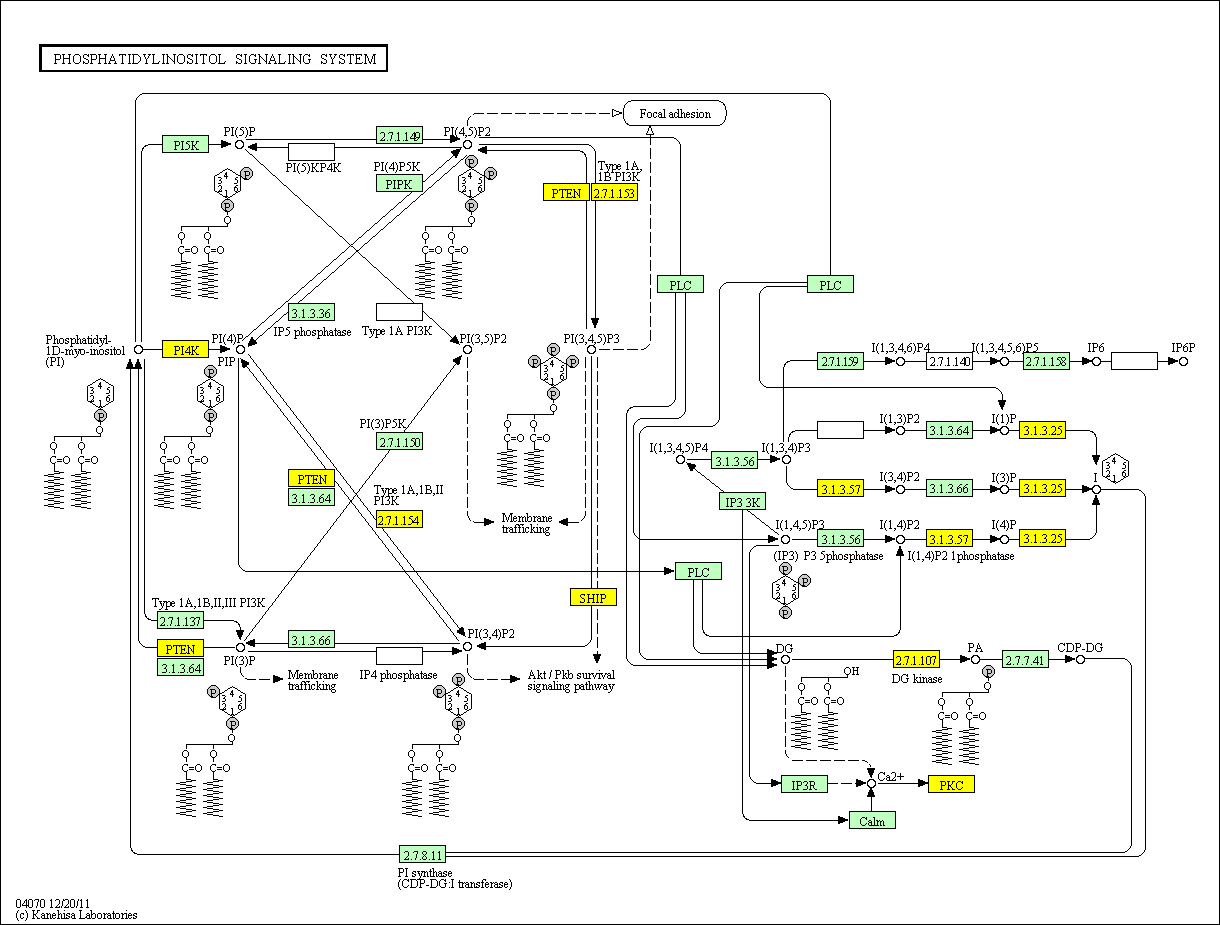
(http://www.polygenicpathways.co.uk/autismkegg.htm Tässä hyvässä kartassa näkyy onkologian kannalta PI3K funktion kohta.PTEN muutaa takaisin PIP3 muodon PIP2 mutoon. Onkologiass tässä on häiriötä.
Hepatic deletion of p110α and p85α results in insulin resistance despite sustained IRS1-associated lipid kinase activity. Manuscript
http://physiologyonline.physiology.org/content/20/4/271
Väitöksen toisessa osassa tutkinaan p110alfan mutaatiota ja mitä siitä seuraa. metabolinen uudelleenohjelmoituminen,
II. Chaudhari A, Krumlinde D, Lundqvist A, Akyürek L, Bandaru S, Skålén K, Ståhlman M, Borén J, Wettergren Y, Ejeskär K, Sopasakis VR
. p110α Hot Spot Mutations in E545K and H1047R Exert Metabolic Reprogramming Independently of p110α Kinase Activity. Mol Cell Biol. 2015; Oct;35(19):3258-73.
VISA ARTIKEL
Väitöskirjan kolmasosa selvittää ARAP2 osuutta mikä heijastuu sfingolipidin syntesiin ja GLUT1 funktioon.
III. Chaudhari A, Håversen L, Mobini R, Andersson L, Ståhlman M, Lu E, Rutberg M, Fogelstrand P, Ekroos K, Mardinoglu A, Levin M, Borén J. ARAP2, a novel regulator of sphingolipid metabolism affects GLUT1 mediated basal glucose uptake. Submitted
Suomennosta tiivistelmästä:
Insuliinisignalointi välittyy kehossa monimutkaisen ja mitä integroidumman verkoston välityksellä kontrolloiden kautta koko kehon moninaisia aineenvaihdunnallisia ja kasvuprosesseja.
Insuliinisignaloinnin avainentsyymi on fosfatidyyliunositoli-3-kinaasi (PI3K). (Fosforidyyli-inositolin lyhennys on PI)
(PI3K katalysoi toisiolähetti-lipidin muodostumista PI- inositolilipidien joukossa.. Numero 3 tarkoittaa inositolirunkossa 3- asemaa, johon 3-kinaasi asettaa fosfaatin . PI(4,5)P muodosta saadaan PI(3,4,5) muotoinen lipidi , siis PIP2-tyyppi muutetaan PIP3-tyyppi muotoon.
http://www.medbio.info/Horn/Time%203-4/Insulin's%20Mechanism%20of%20Action.htm)
Tässä väitöskirjassa on tutkittu onkogeenisen PI3K entsyymimutaation vaikutusta ja myös sen avain-alayksikön isoformien deleetion vaikutusta glukoosiaineenvaihduntaan. Tunnistettiin myös ARAP2, joka sisältää PH-domaanin ja sen osuutta lipidipisaroitten muodostukseen selvitettiin.
Työn kolmannessa osassa tunnistettiin ARAP2 proliini-histidiini-domaanin sisältävänä proteiinina lipidipisaraproteomsisa. ARAP2 poistogeenisyys johti alentuneeseen lipidipisaramuodostukseen TG-synteesin tahtia vähentämällä. Tämä alempi TG-muodostuksen tahti johtui alentuneesta peruslinjan glukoosin otosta soluun GLUT1 kuljettan vähentynen ilmentymisen takia. Myös GLUT1 pitoisuudet plasmamebraanissa ja lipidi-mikrodomaaneissa olivat alentunut. Vaikutuksen GLUT 1:een välitti lisääntynyt glukosyylikeramidisynteesi.
KOMMENTTI: Väitöskirja avartaa edelleen energia-aineenvaihdunnan fundamentaalisia polkuja osoitaen yhteyksiä TG sytneesin ja glukoosin saannin eksekn ja glykosylaation harhapolun kohtia.
Lisäksi PI3K säätelyyn tulee ottaa IPx kinaasinkin puolen osuus IP6-IP7 muutos, mikä on mainittu tuossa liitetyssä vinkissä.
On esitteillä uusi väitöskirjan. Otsikko on Roles of PI3K and ARAP2 in regulating glucose metabolism.
Väittelijä on Aditi Chaudhari. Vastaväittäjä on Sveitsistä professori Matthias Wymann.
Väitöstilaisuus on edessäpäin ja tässä katson alustavasti abstraktin sanomaa.
ISBN: 978-91-628-9803-8.
Tässä väitöskirjassa on kolme osaa jossa on näiltä suunnilta läheystytty tärkeää glukoosimetaboliaa ja samalla kalvofunktiodynamiikkaa, mikä siihen kuuluu. Täytyyhän kaikki sokeri saada kuljetettua kalvon läpi solun saataville mieluiten järjestyneesti sen oikeita reittejä myöten eikä diffundoitumalla liian suuren pitoisuuden takia ja glykosylaatiota vaikutatmalla.
PI3K entsyymin funktioita peilattiin esiin sen deleetio ja mutaatiomuodoista käsin.
Kolmannessa osassa selviteltiin ARAP2 säätelyä sfingolipidiaineenvaihduntaan ja GLUT1 välitteiseen glukoosin soluun ottoon.
(http://www.polygenicpathways.co.uk/autismkegg.htm Tässä hyvässä kartassa näkyy onkologian kannalta PI3K funktion kohta.PTEN muutaa takaisin PIP3 muodon PIP2 mutoon. Onkologiass tässä on häiriötä.
Väitöstyön I osa: Allaoleva kuva ei liity väitöskirjaan, mutta esittää nämä isomeerit, jotka työssä deletoidaan.
I. Chaudhari A, Ejeskär K, Wettergren Y, Kahn CR, Sopasakis VR.Hepatic deletion of p110α and p85α results in insulin resistance despite sustained IRS1-associated lipid kinase activity. Manuscript
http://physiologyonline.physiology.org/content/20/4/271
Väitöksen toisessa osassa tutkinaan p110alfan mutaatiota ja mitä siitä seuraa. metabolinen uudelleenohjelmoituminen,
II. Chaudhari A, Krumlinde D, Lundqvist A, Akyürek L, Bandaru S, Skålén K, Ståhlman M, Borén J, Wettergren Y, Ejeskär K, Sopasakis VR
. p110α Hot Spot Mutations in E545K and H1047R Exert Metabolic Reprogramming Independently of p110α Kinase Activity. Mol Cell Biol. 2015; Oct;35(19):3258-73.
VISA ARTIKEL
Väitöskirjan kolmasosa selvittää ARAP2 osuutta mikä heijastuu sfingolipidin syntesiin ja GLUT1 funktioon.
III. Chaudhari A, Håversen L, Mobini R, Andersson L, Ståhlman M, Lu E, Rutberg M, Fogelstrand P, Ekroos K, Mardinoglu A, Levin M, Borén J. ARAP2, a novel regulator of sphingolipid metabolism affects GLUT1 mediated basal glucose uptake. Submitted
Suomennosta tiivistelmästä:
Insuliinisignalointi välittyy kehossa monimutkaisen ja mitä integroidumman verkoston välityksellä kontrolloiden kautta koko kehon moninaisia aineenvaihdunnallisia ja kasvuprosesseja.
Insuliinisignaloinnin avainentsyymi on fosfatidyyliunositoli-3-kinaasi (PI3K). (Fosforidyyli-inositolin lyhennys on PI)
(PI3K katalysoi toisiolähetti-lipidin muodostumista PI- inositolilipidien joukossa.. Numero 3 tarkoittaa inositolirunkossa 3- asemaa, johon 3-kinaasi asettaa fosfaatin . PI(4,5)P muodosta saadaan PI(3,4,5) muotoinen lipidi , siis PIP2-tyyppi muutetaan PIP3-tyyppi muotoon.
http://www.medbio.info/Horn/Time%203-4/Insulin's%20Mechanism%20of%20Action.htm)
Tässä väitöskirjassa on tutkittu onkogeenisen PI3K entsyymimutaation vaikutusta ja myös sen avain-alayksikön isoformien deleetion vaikutusta glukoosiaineenvaihduntaan. Tunnistettiin myös ARAP2, joka sisältää PH-domaanin ja sen osuutta lipidipisaroitten muodostukseen selvitettiin.
- Insulin signaling is mediated by a complex, highly integrated network which functions to control multiple metabolic and growth processes throughout the organism.PIP3 osallistuu moniin solufunktioihin kuten solun kasvuun, solun elossapysymiseen aj apoptoosiin.
- A key enzyme in the insulin signaling network is phosphatidylinositol 3-kinase (PI3-kinase). PI3-kinase catalyzes the production of the lipid second messenger, phosphatidylinositol 3, 4, 5- triphosphate (PIP3), which is involved in various cellular functions such as cell growth, survival and apoptosis.
- In this thesis, we have investigated the impact of oncogenic mutations of PI3-kinase, as well as deletion of its key subunit isoforms on glucose metabolism. We also identified a PH-domain containing protein ARAP2, and investigated its role in lipid droplet formation.
- In Paper I, we investigated the effect of combined hepatic deletion of the PI3-kinase subunits p110α and p85α (L-DKO) on insulin signaling and glucose homeostasis. L-DKO mice developed impaired glucose-tolerance, but surprisingly displayed intact IRS1-associated lipid kinase activity. The mice exhibited decreased body weight, but similar adipose tissue weight, hepatic glucose production as well as normal insulin tolerance, demonstrating a paradoxical milder phenotype compared to mice having only p110α deleted in the liver.
- In Paper II, we investigated the effects of the hot spot mutations E545K and H1047R of p110α on hepatic and whole body glucose homeostasis. The expression of these mutations resulted in a reprogrammed cellular metabolism with marked accumulation of lipids and glycogen in the liver. Wild-type (wt) p110α expression did not result in hepatic lipid or glycogen accumulation despite having similarly increased expression of glycolytic and lipogenic genes.
- Furthermore, there was no difference in the kinase activity between the wt- and mutant-expressing mice, which suggest that the metabolic effects exhibited by the p110α mutants are linked to kinase-independent function(s) of the oncogenic p110α
- In Paper III, we identified ARAP2 as a PH-domain containing protein in the lipid droplet proteome. We show that knockdown of ARAP2 leads to diminished lipid droplet formation by decreasing the rate of triglyceride synthesis. The lower triglyceride synthesis rate resulted from decreased basal glucose uptake through lower expression of GLUT1, as well as reduced GLUT1 levels in the plasma membrane and lipid micro-domains. The effect on GLUT1 was mediated by increased glucosylceramide synthesis.
Työn kolmannessa osassa tunnistettiin ARAP2 proliini-histidiini-domaanin sisältävänä proteiinina lipidipisaraproteomsisa. ARAP2 poistogeenisyys johti alentuneeseen lipidipisaramuodostukseen TG-synteesin tahtia vähentämällä. Tämä alempi TG-muodostuksen tahti johtui alentuneesta peruslinjan glukoosin otosta soluun GLUT1 kuljettan vähentynen ilmentymisen takia. Myös GLUT1 pitoisuudet plasmamebraanissa ja lipidi-mikrodomaaneissa olivat alentunut. Vaikutuksen GLUT 1:een välitti lisääntynyt glukosyylikeramidisynteesi.
KOMMENTTI: Väitöskirja avartaa edelleen energia-aineenvaihdunnan fundamentaalisia polkuja osoitaen yhteyksiä TG sytneesin ja glukoosin saannin eksekn ja glykosylaation harhapolun kohtia.
Lisäksi PI3K säätelyyn tulee ottaa IPx kinaasinkin puolen osuus IP6-IP7 muutos, mikä on mainittu tuossa liitetyssä vinkissä.
Väitöskirja PI3-kinaasista ja ARAP2. Mikä on ARAP2
On esitteillä uusi väitöskirjan. otsikko on Roles of PI3K and ARAP2 in regulating glucose metabolism.
Väittelijä on Aditi Chaudhari. Vastaväittäjä on Sveitsistä professori Matthias Wymann.
Väitöstilaisuus on edessäpäin ja tässä katson alustavasti abstraktin sanomaa.
Eninnäkin ARAP2 geenin nimen tarkistus on tästä lähteestä:
http://www.genecards.org/cgi-bin/carddisp.pl?gene=ARAP2
ARAP2 geenillå on synonyymejä, joista sen tuntee: Centaurin Delta 1,Cnt-D1, CENTD1, Arf And Rho GAD Adapter protein 2,protein PARX, KIAA0580, PARX.
ARAP2 = Ankyrin Repeat AND PH Doman 2.
ARAP2 geeni sijaitsee kromosomissa 4p14(15.1)
Näistä ArfGAP-proteiineista on hyvä luettelo netissä syöpätutkimusten yhteydessä tästä lätheestä saa myös ARAP2 proteiinin sijoittumisen näitten joukkoon.
ArfGAP-perhe http://onlinelibrary.wiley.com/doi/10.1111/j.1600-0854.2007.00624.x/pdf 2007
- Review Arf GAPs and Their Interacting Proteins Hiroki Inoue and Paul A. Randazzo* Laboratory of Cellular and Molecular Biology, Center for Cancer Research, National Cancer Institute, Bethesda, MD 20892, USA Membrane trafficking and remodeling of the actin cyto-
- skeleton are critical activities contributing to cellularevents that include cell growth, migration and tumorinvasion. ADP-ribosylation factor (Arf)-directed GTPaseactivating proteins (GAPs) have crucial roles in theseprocesses. The Arf GAPs function in part by regulatinghydrolysis of GTP bound to Arf proteins. The Arf GAPs,which have multiple functional domains, also affect theactin cytoskeleton and membranes by specific interac-tions with lipids and proteins. A description of theseinteractions provides insights into the molecular mecha-nisms by which Arf GAPs regulate physiological andpathological cellular events. Here we describe the ArfGAP family and summarize the currently identifiedprotein interactors in the context of known Arf GAPfunctions.Key words: actin, Arf1, Arf6, ASAP1, circular dorsalruffles, cortactin, EGF receptor, focal adhesion, invado-podia, podosomeReceived 10 May 2007, revised and accepted for publica-tion 6 July 2007, uncorrected manuscript publishedonline 12 July 2007, published online 31 July 2007
- ARAP21 on suurin proteiini näissä ArfGAP-perheen proteiineissa ARAPs are the largest proteins in the Arf GAP family. GAPs in this subtype havea Rho GAP domain in addition to an ArfGAP domain. They also contain a sterilea-motif (SAM), five PH domains and a Ras association (RA) domain. Twoof the five PH domains contain a PI(3,4,5)P3-binding con-sensussequence. PI(3,4,5)P3 more potently stimulates the Arf GAP activity of ARAPsthan do other phosphoinositides . The three members of the ARAP subtype ofArf GAPs have different Arf specificities. ARAP1 (centaurin d1functions with Arf1 and Arf5 . ARAP2 (centaurin d1 PARXpreferentially uses Arf6, as compared with Arf1 and Arf5, as a substratein vitro and in vivo . ARAP3 (DRAG/ centaurin d has been reported to function as an Arf6 or Arf5 GAP in vitro and to regulate Arf6-dependent events including membrane protrusions and rufflingin vivo.
- ARAP21 on suurin proteiini näissä ArfGAP-perheen proteiineissa
ARAP2 ja GLUT 1 suhteesta
30 Atherosclerosis Supplements 12, no. 1 (2011) 13–184 Poster presentations
Conclusion: apoC1 is a constitutive inhibitor of CETP in normolipidemichumans, but it no longer operates in hyperlipidemic patients with CAD.
128 ARAP2-INDUCED CHANGES IN SPHINGOLIPID BIOSYNTHESIS PROMOTE LIPID DROPLET FORMATION BY INCREASING GLUT1 LEVELS IN THE PLASMA MEMBRANE L. Li 1, R. Mobini1, et al.
.Sahlgrenska Center for Cardiovascular and Metabolic Research, Wallenberg Laboratory, University of Gothenburg, Gothenburg,Sweden, 2 Zora Biosciences Oy, Espoo, FinlandLipid droplets are organelles involved in the storage and processing of neutral lipids such as triglycerides, and recent evidence suggests a close interaction between lipid droplets and specialized domains of the plasma membrane known as lipid rafts.Here we identified ARAP2 as a lipid droplet-associated protein that increases the formation of lipid droplets by promoting triglyceride biosynthesis. ARAP2 increased basal glucose uptake and GLUT1 levels in the lipid raft fraction of the plasma membrane, which likely explains the increased triglyceride biosynthesis.
We also showed that ARAP2 influenced the lipid composition of cells and the lipid raft fraction by promoting sphingomyelin biosynthesis and reducing glucosylceramide biosynthesis.
Furthermore, we showed that ARAP2 could mediate these effects by inhibiting the activity of glucosylceramidesynthase.
Inhibition of this enzyme promoted the activity of plasma membrane sphingomyelin synthase 2 and the accumulation of GLUT1 in the lipid raft fraction of the plasma membrane.
We also showed that palmitic acid (C16:0) increased the expression of ARAP2 and GLUT1 levels in the lipid raft fraction.
Our data indicate that GLUT1 levels in lipid rafts, and hence basal glucose uptake and triglyceride biosynthesis, can be increased by an ARAP2-induced reduction in GCS activity and in the glucosylceramide biosynthesis. We therefore propose that ARAP2 is part of a mechanism that protects cells from lipotoxic fatty acids by increasing basal glucose uptake to promote lipid droplet formation.
Kommentti. (siis normaalista etikkahaposta 2+2+2 tietä syntyvä palmitiinihappo c16 kääntyy paremminkin normaaliin sfingomyeliinin muodsotukseen asti ja glukoosikin etenee iparemmin fosforyloituneena energiatiehen rasvan pysyessä rasvapisaroina eikä niiden sokeroituneinta versioina. Palmitiinihappo on rasva-aineenavihdunnan kriittinen kohta, koska siinä on oma entsyymipakkinsa heti kuin 2+2 synteesi saapuu C16 kokoon) Seriini ja palmitiini kondensoituvat B6 vitamiinin ja K1 vitamiinin avulla sfinganiiniksi ja sitä tietä ceramidisynteesiin,josta tulee sfingomyeliiniä, missä ei kaivata tässä oksidoivaa sokeria. diabeetista tilaa). Siis käytännössä: pitää musitaakäyttää vihreitä ja mutia vihanneksia, syödä siemenruokaa ja täysjyviä sekä kalaa jaa palkohedelmiä eikä B-vitamiineista a ole haittaa. .Siis koettaa pitää normoglykemiaa ja välttää liikamäärää ravintoenergiaa.
onsdag 4 november 2015
Inositolituman kierrätys avustaa pyrofosfaattien keräämistä orgaanisen fosfaatin puolelle tumasta
http://www.ncbi.nlm.nih.gov/pubmed/8554538
IP6 muodostuu tumaentsyymeillä ja siten pääsee tumasta ulos- ja plasmaan tullssa fosfaatit ovat jo talletettu esim NTP muodostuksiin. Inositolilla epäorgaaniset Pi fosfaatit saadaan DNA ja RNA synteesistä ja hajoituksista nopeasti talteen ja taas orgaaniseen muotoon ja energiapakettien valmistukseen.
IP6 muodostuu tumaentsyymeillä ja siten pääsee tumasta ulos- ja plasmaan tullssa fosfaatit ovat jo talletettu esim NTP muodostuksiin. Inositolilla epäorgaaniset Pi fosfaatit saadaan DNA ja RNA synteesistä ja hajoituksista nopeasti talteen ja taas orgaaniseen muotoon ja energiapakettien valmistukseen.
Ravinnon tarjoama IP6 muoto fytiini säilyttää tärkeän inositolituman tarpeeksi kauan intaktina jotta se pääsee tähän DNA-repair järjstelmään asti aineenvaihduntaan.
Jos se jo syömisvaiheessa on fytaasilla hajoitettu epäorgaanisiksi fosfaateiksi ja alemmiksi inositolifosfaateiksi ennen solujen anabolisia funktioita, ei ole suhteellisesti tarpeeksi korkeita inositolifosfaatteja kataboliseen vaiheeseen, jossa plasma sitten omalla fytaasilla ottaa fosfaatteja irti spesifisistä kohdista
Koska kehon IPx kohdistuvat entsyymit ovat ehkä kudosspeisifisiä tai aitiospesifisiåä, on paras tarjota ravinnossa IP6 muotoa jotta keho voi sen paikallisesti muokata käyttökelpoisiin muotoihin sillä DNA repair systemi vaatii nopeasti saatavilla olevia fosfaatteja siirteleviä muotoja. Fosfaati on aina johonkin liittyneenä,
Jos näitä kehikkoja ei ole- on sitten ongelmia kuten prufosfaattikiteet tms. tai IP3/IP6 epäsuhde.
Epäsuhde IP6 ja alempien inositolifosfaatien saannissa tai ravinnosa jossa ei ole edullista inositolituman saantia (liika glukoosi sokeri estää sen saantia) , tulee vaikutusta rakentellisten ja funktionaalisten inostiolijohdannaisten aineenvaihduntaan. Jos saadaan vain inostiolia, se kulkeutuu solukalvolipideihin ja sitä kautta voi kehittyä IP3 ja jopa IP6 kun on rikastumista ATP.stä käsin.
Sen takia on hyvä saada IP6 muotoa ravinnossa( siemeinistä, jyvistä) että annetaan mahdollisuus keholle muokata niitä moninaisia muotoja, mitä erittäin kiireinen fosfaattien käsittelyjärjeselmä ja fosfatipuskuri kehossa tarvitsee.
Eihän sitä Luojakaan odottanut luotuaan ihmisen, että tämä heti olisi oivaltanut fytaatin saamisen tärkeyden, ja siksi antoi käskyn syödä kaikenlaisia siemeniä ja jyviä, että ihminen voisi kehittyä DNA- genomiltaan evoluutionsa aikana esteettä.
Prenumerera på:
Inlägg (Atom)